
Minor Consolations
2004
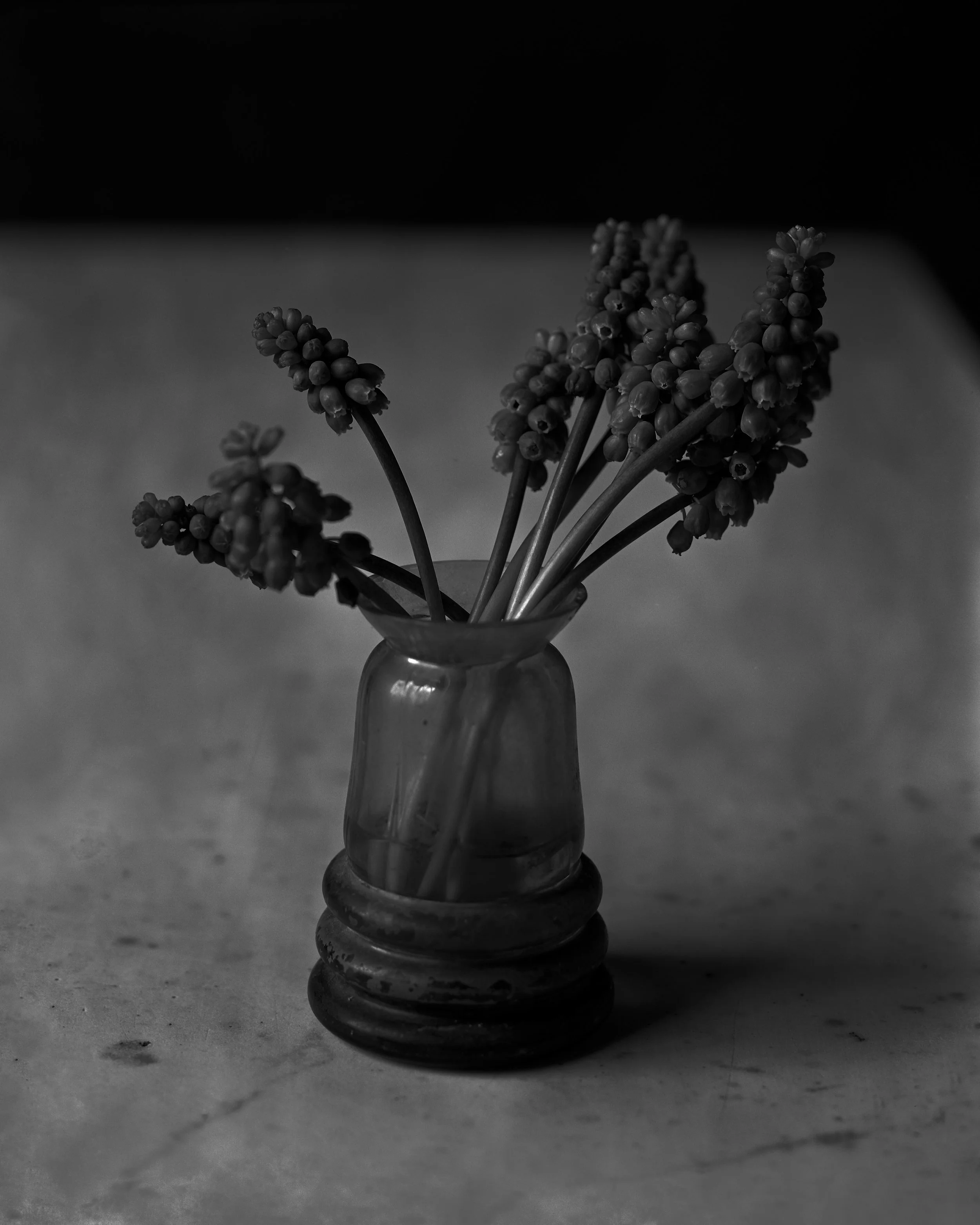
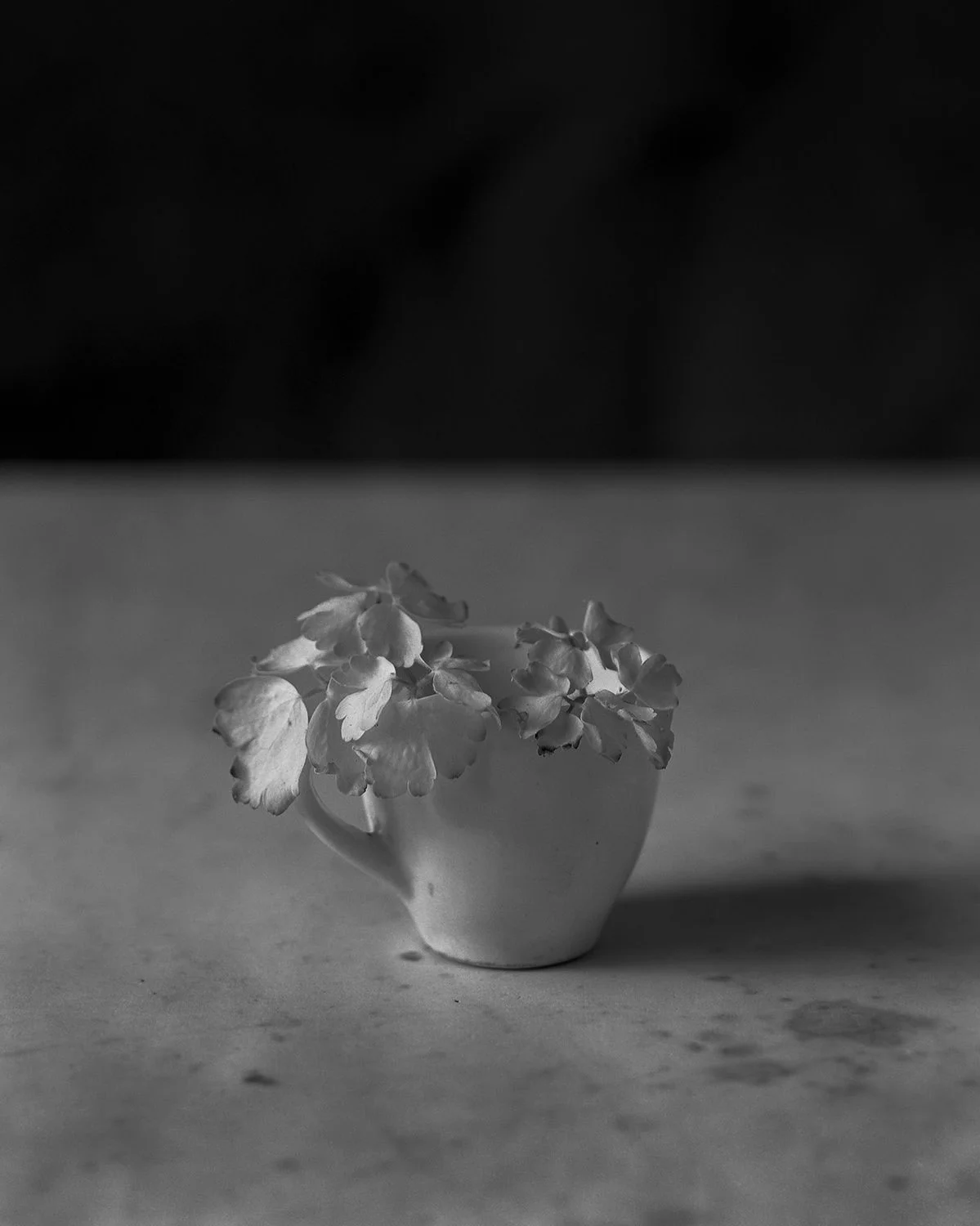
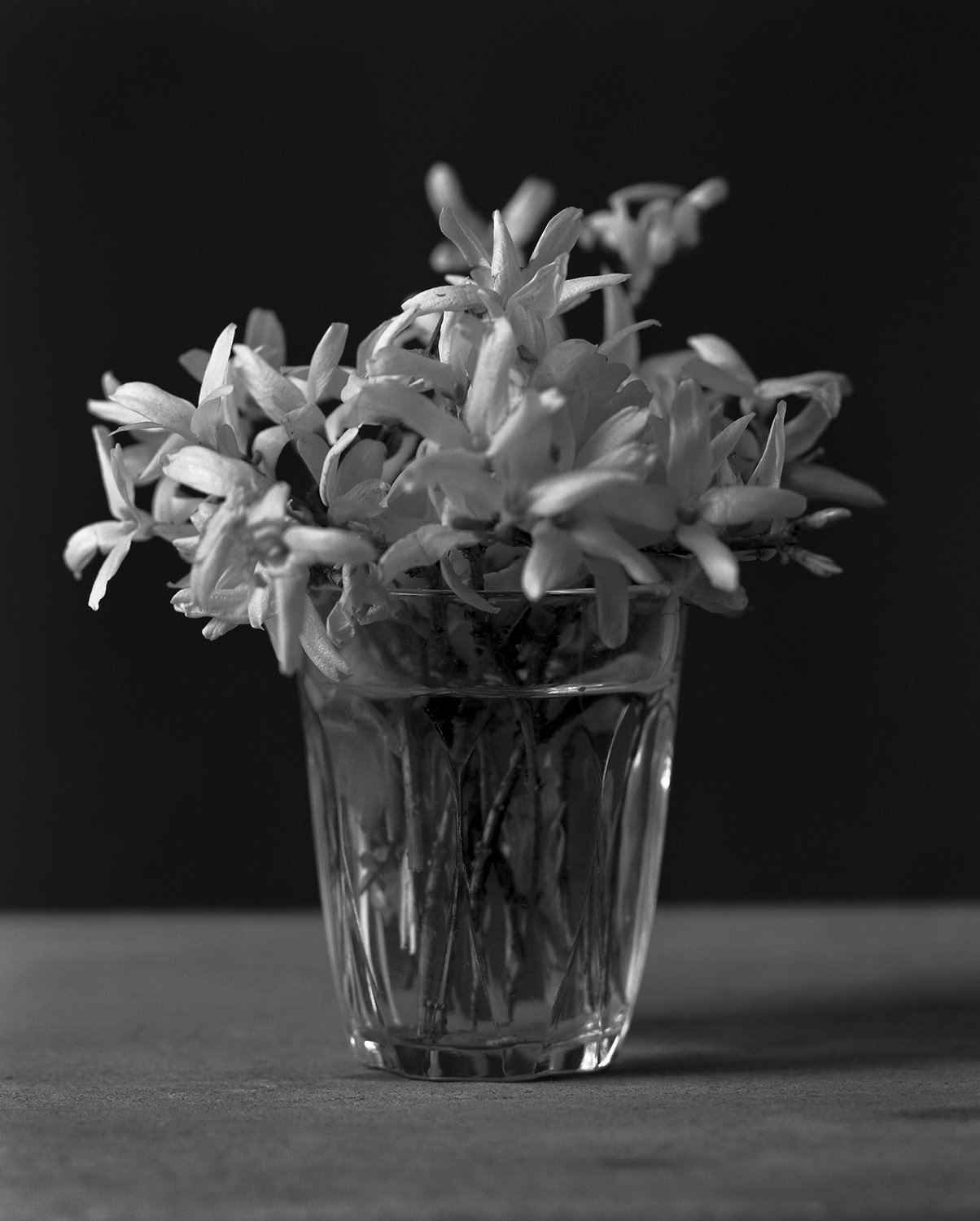
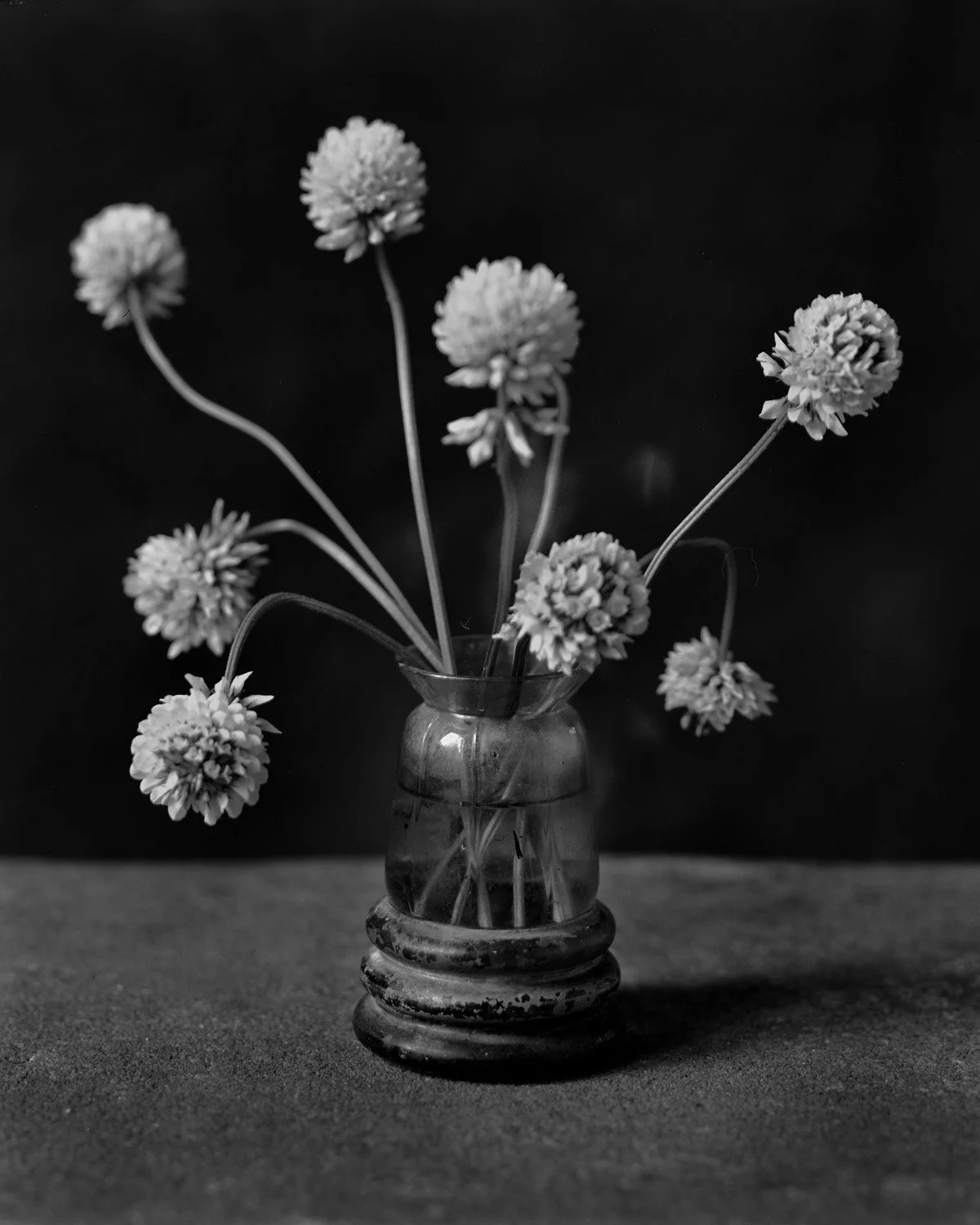
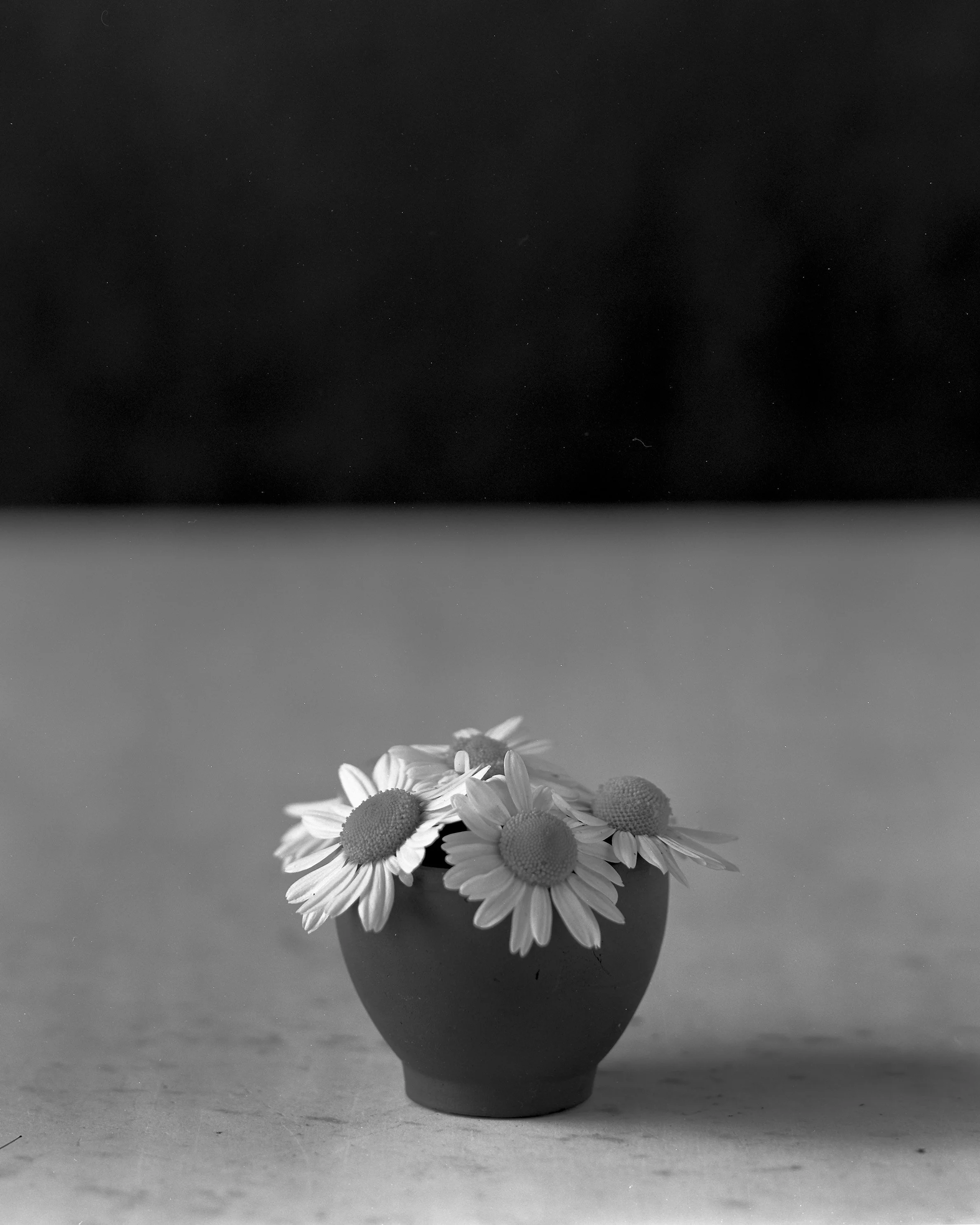
“The flowers were picked and arranged by his children at a time of a serious family illness— small lonely displays on grubby tabletops, fragile floral compensations which are preserved, but darkly, in the deathless, undying medium of photography.” Mark Durden
Mark Durden on Minor Consolations.
His latest series, Minor Consolations, could be seen to call upon the tradition of still life and especially the seventeenth-century Dutch Vanitas of flower painting. But his are far from the riches and luxuriance of this tradition, where the Vanitas theme was played out amidst the splendour, abundance and diversity of the flowers on display. A closer point of reference is found in some of Manet’s flower paintings made in the last years of his life, the same modesty and directness characterises Wilson’s non-ostentatious and unassuming still life pictures. In terms of the photographic history of the genre, they are far from Roger Fenton’s exotic and excessive Victorian extravagances. They are closer perhaps to Edward Weston’s photographs of fruit and vegetables. But Wilson is not as obsessed with form. In his photographs, the flowers in the cups, glasses and various containers, which all go to serve as makeshift vases, are essentially weeds or common garden flowers. And the arrangements are awkward; all have a certain informality, lack balanced composition. The flowers were picked and arranged by his children at a time of a serious family illness— small lonely displays on grubby tabletops, fragile floral compensations which are preserved, but darkly, in the deathless, undying medium of photography. With no whites and highlights, and all frozen behind a glass which does not reflect light, the very printing and display is keyed into the mood and affect of this work. The impression given is of light being sucked out of these photographs. They have something akin to Daido Moriyama’s harsh photographs, from the early seventies, which made even the archetypal Japanese landscape, of trees in cherry blossom, appear grey and dirty. One is struck by the ordinariness of the subject matter in Minor Consolations. These stilllifes most fully confront us with banality. The “low plane reality” of his subject is more readily accepted in this series. We lose the formal geometric purity of the arrangements in his other pictures. Less contained and controlled, these latest photographs are messier.
The flower arrangements are untouched and unaltered, photographed simply as they were received. One possible point of relation for such work is found in the vernacular photographic tradition that circulated alongside and within photography’s history— epitomised by that anonymous postcard of apples, dating from 1907 or earlier, which John Szarkowski included in his selection of a hundred photographs from the collection of New York’s Museum of Modern Art: a picture “memorializing the triumph of a dead, unheralded pomologist, and the sincere and simple construction of an anonymous provincial photographer.”
Wilson’s photographs are also interesting in relation to the way they both confirm and undo Szarkowski’s famous distinction between photography and traditional painting. Painting was “slow, difficult, rare and expensive, and was therefore used to record things of great importance” while photography “was quick, ubiquitous, and cheap, and was used to record everything, most of which seemed, by painters’ standards evanescent and trivial”. 4 Szarkowski’s example of the postcard indicates the lowliness of photography’s subject matter, but also importantly shows how low things are transformed once they are photographed. Wilson’s latest pictures, of course, all elevate the lowly, but do so, by using processes which can be considered to be “slow, difficult rare and expensive” in photography, capitalise on a crafted aesthetic which could be seen to be more akin to painting.
In Minor Consolations, the luxury of the printing and framing, the shift in scale, pulls against the poverty and artlessness of the things photographed. The shallow depth of focus introduces a physical, haptic element in our relationship to these floral tributes. Their symbolic importance, however private, is magnified and monumentalised. Even if we did not know the context behind the making of these small decorative displays, their specialness and value remains clearly unambiguous. These are, then, very much epic stilllifes’s. They invite us to dwell upon the emotional significance of these commonplace garden flowers, flowers which serve as tokens of love, little fragile moments of jubilation, all set against palpable black voids. Wilson gives grace and gravitas to such small things and the simple gestures underlying them. Photography is for him here very much caught up in an act of veneration and cherishing.
Mark Durden, Professor of Photography at the University of South Wales, writer and artist.
Minor Consolations. Series 2004. All website images are digital scans of 4x5 (10x13cm) analogue working contact prints.