
Silent Compositions
2000/2003
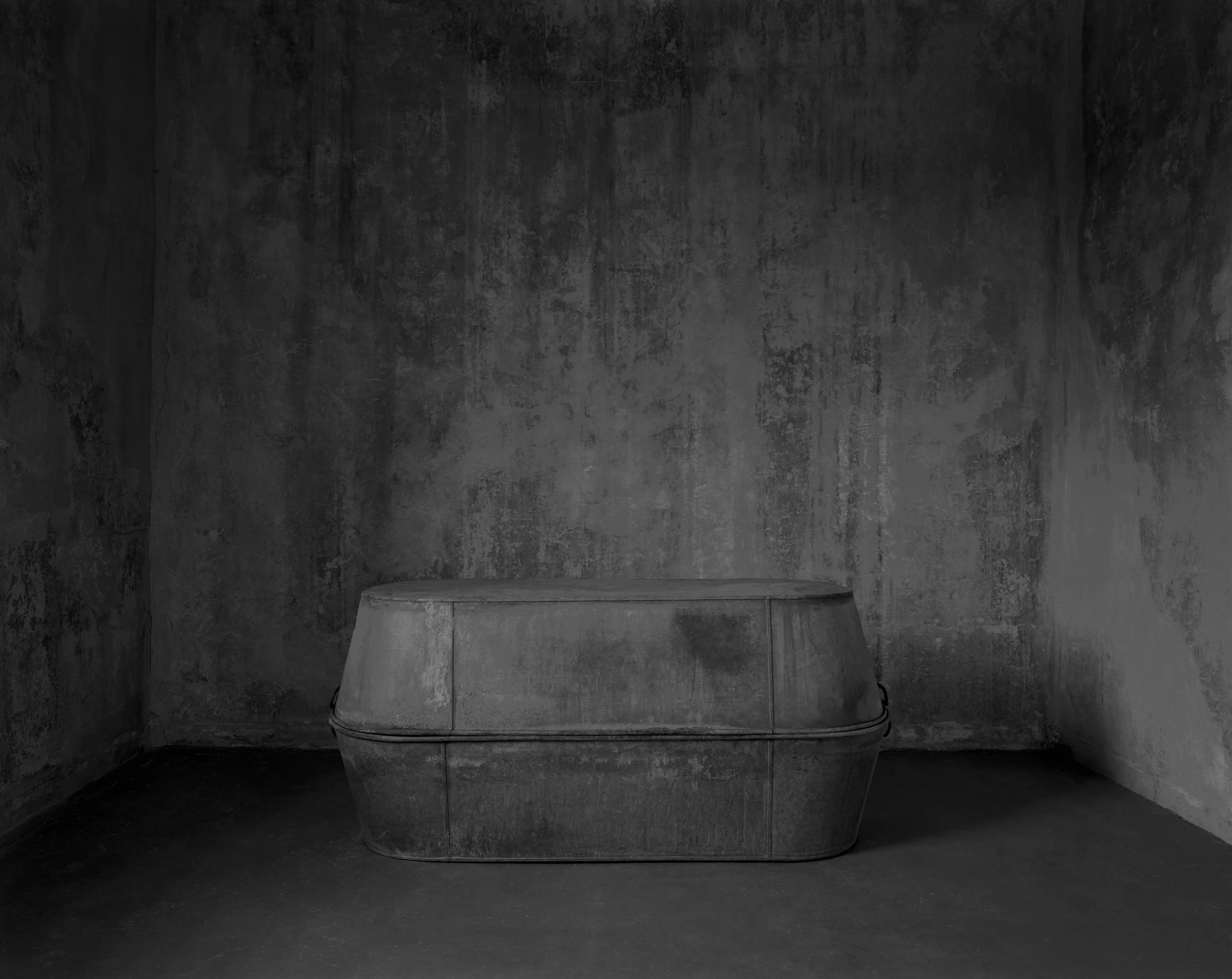
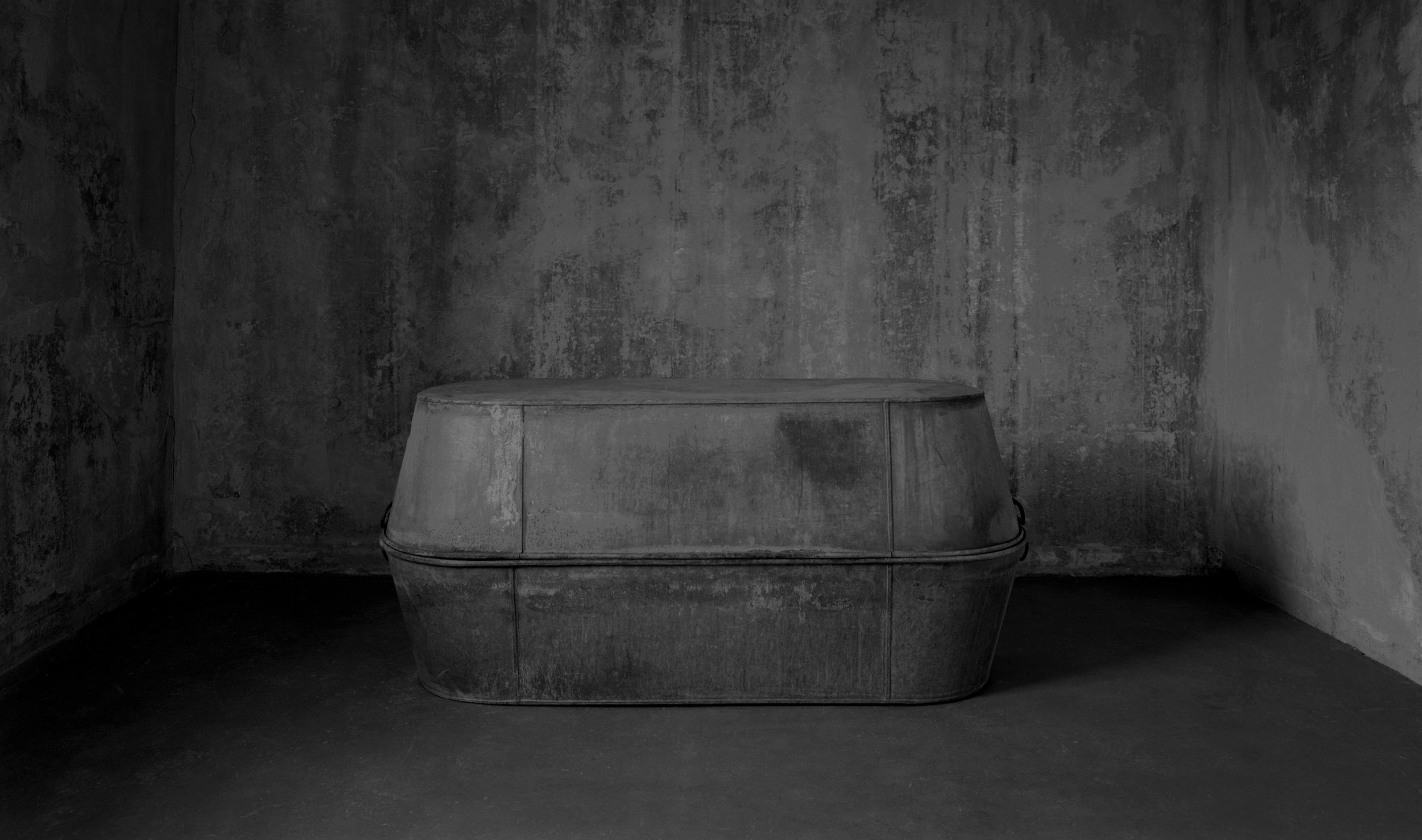
“two strange coffin-life forms created by two tin bathtubs… suggest absent human figures. Such a claustrophobic picture evokes a sense of an eternal deathly embrace, of a couple forever locked together, a dark and gothic variant of Brancusi’s Kiss.” Mark Durden
Monumental Still Life: Silent Compositions 1
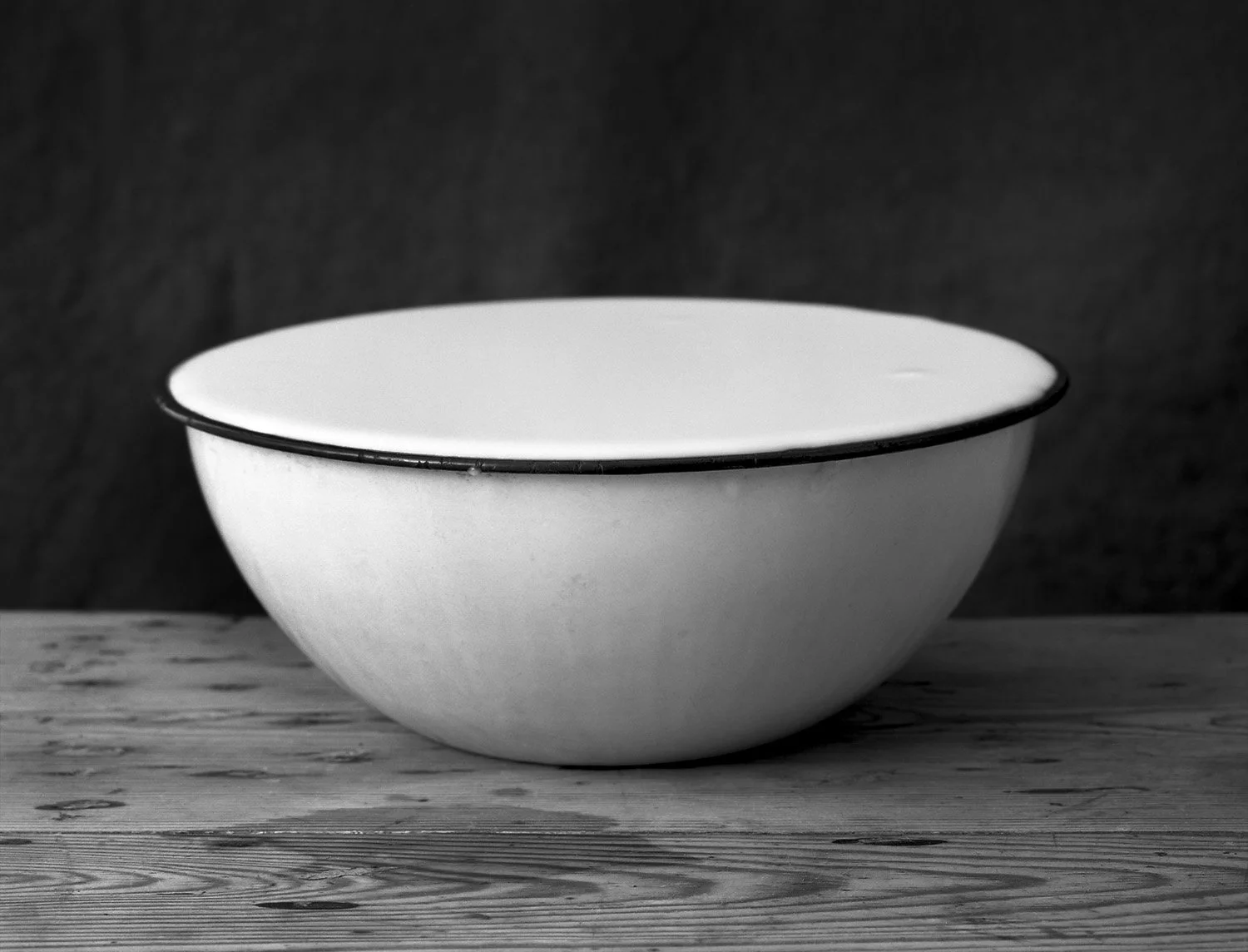
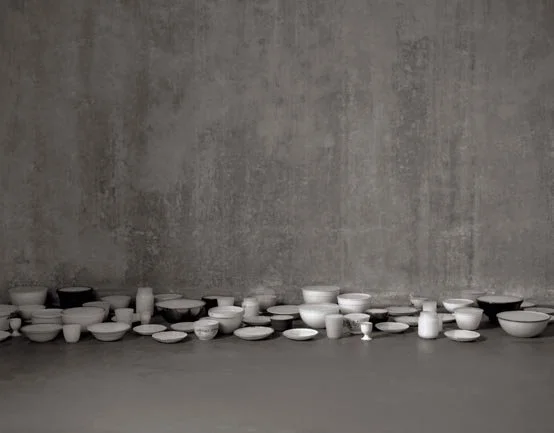
Colin Wilson is working both with and against “the low plane reality” of the still life genre. His photographs tend to be spare and understated, unadorned, stripped and pared down to essential elements and forms. There is also an economy through the plain and familiar things which he often chooses to photograph. Beauty and luxuriance enters the work through what many might see as the “old style” techniques of photographic representation he uses. Wilson concentrates us on the process of pictorial description through the sensuous form of his meticulous black and white depictions, rich in detail and tonality. Things, ordinary common things, possess a real presence in his pictures, a presence which is at once both physical and symbolic. Take, for example, his photograph of a simple old white enamel bowl placed upon a wooden table. In many senses this is a straightforward still life of a not unfamiliar object, a study of the beauty of its half-spherical form, which in the photograph looks a little more like an egg cut in two and on its side. Only one soon becomes aware that things are not so straightforward and matter of fact. The bowl is literally full to the brim with milk. A small drip has gathered on the lip of the bowl and there’s a wet stain clearly visible on the wood surface. There’s also a little blemishing ripple which disrupts the surface of the milk. In such a concentrated moment, it is as if the stillness of this still life is being drawn out, the sense is of something being held, kept in, like a breath. As its presence is heightened through its depiction, so being photographed when brim-full of milk further alters the bowl’s value and meaning: it becomes metaphoric, associated with sustenance, with fecundity, the life force of a pregnant human form. In many respects, the counterpoint to this picture is the photograph showing the two strange coffin-life forms created by two tin bathtubs, one turned on top of another, so the two appear like a locked case or casket. The setting for this display of objects is a bare room, some unused attic space, stripped of all décor. The bathtubs suggest absent human figures. Such a claustrophobic picture evokes a sense of an eternal deathly embrace, of a couple forever locked together, a dark and gothic variant of Brancusi’s Kiss.
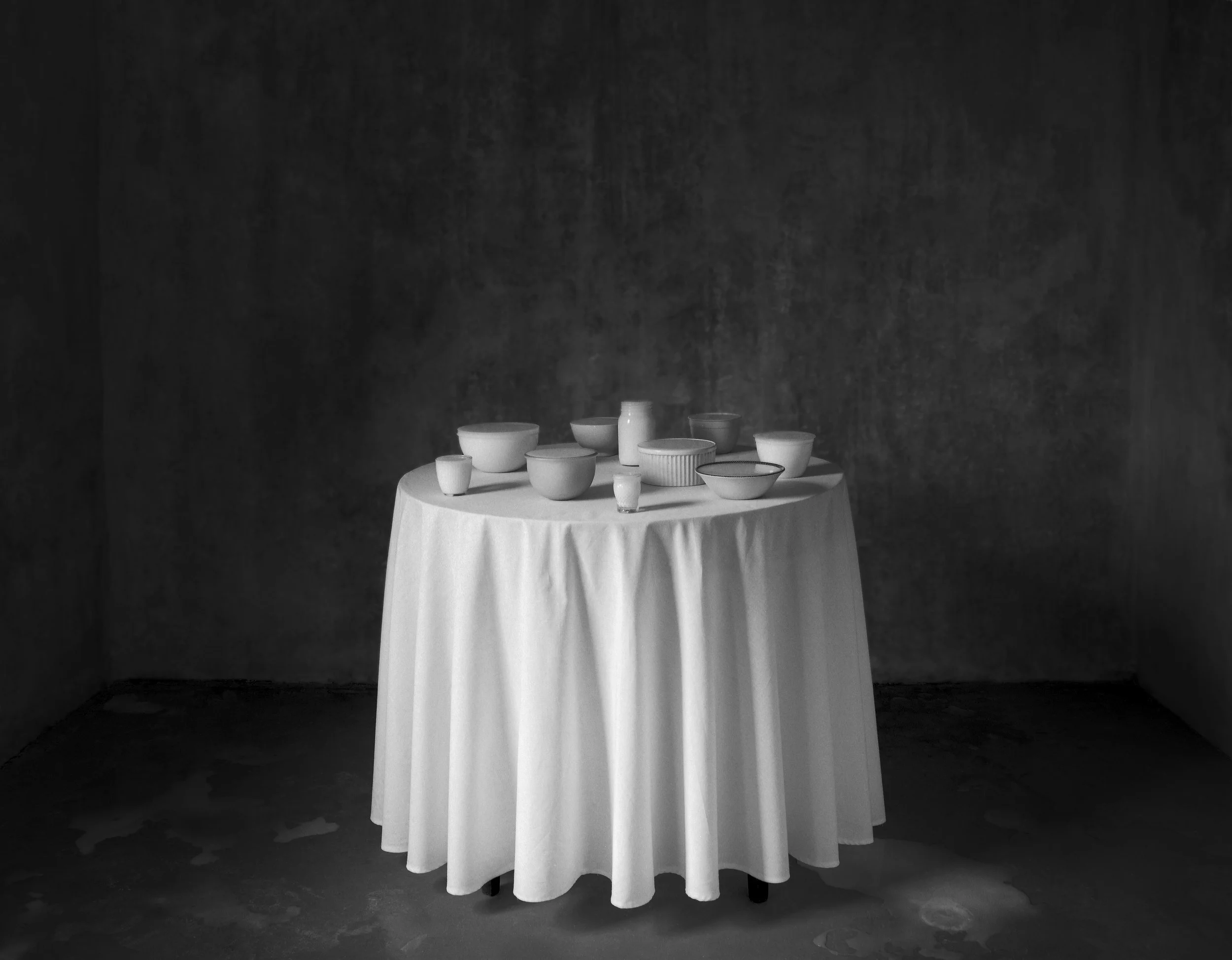
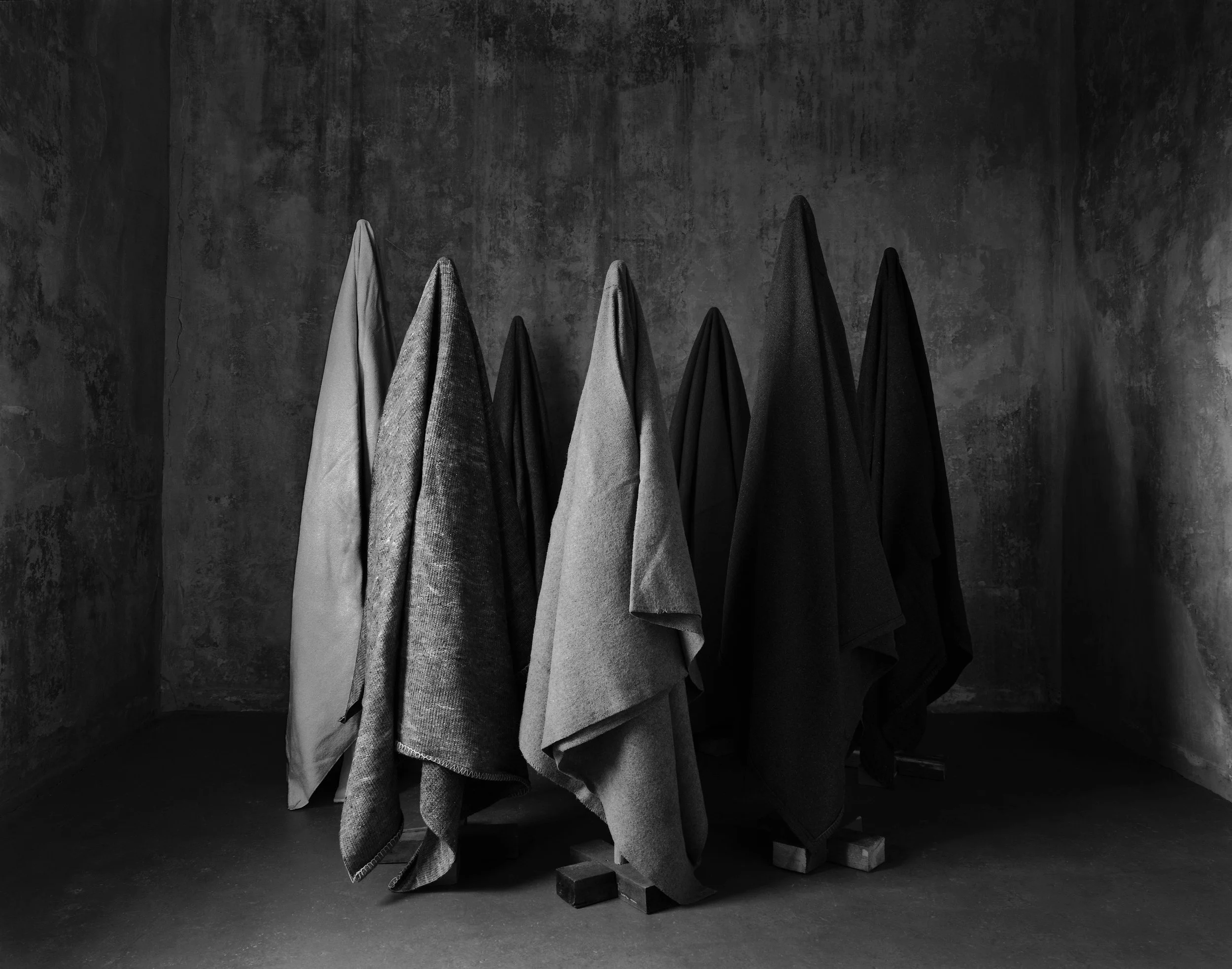
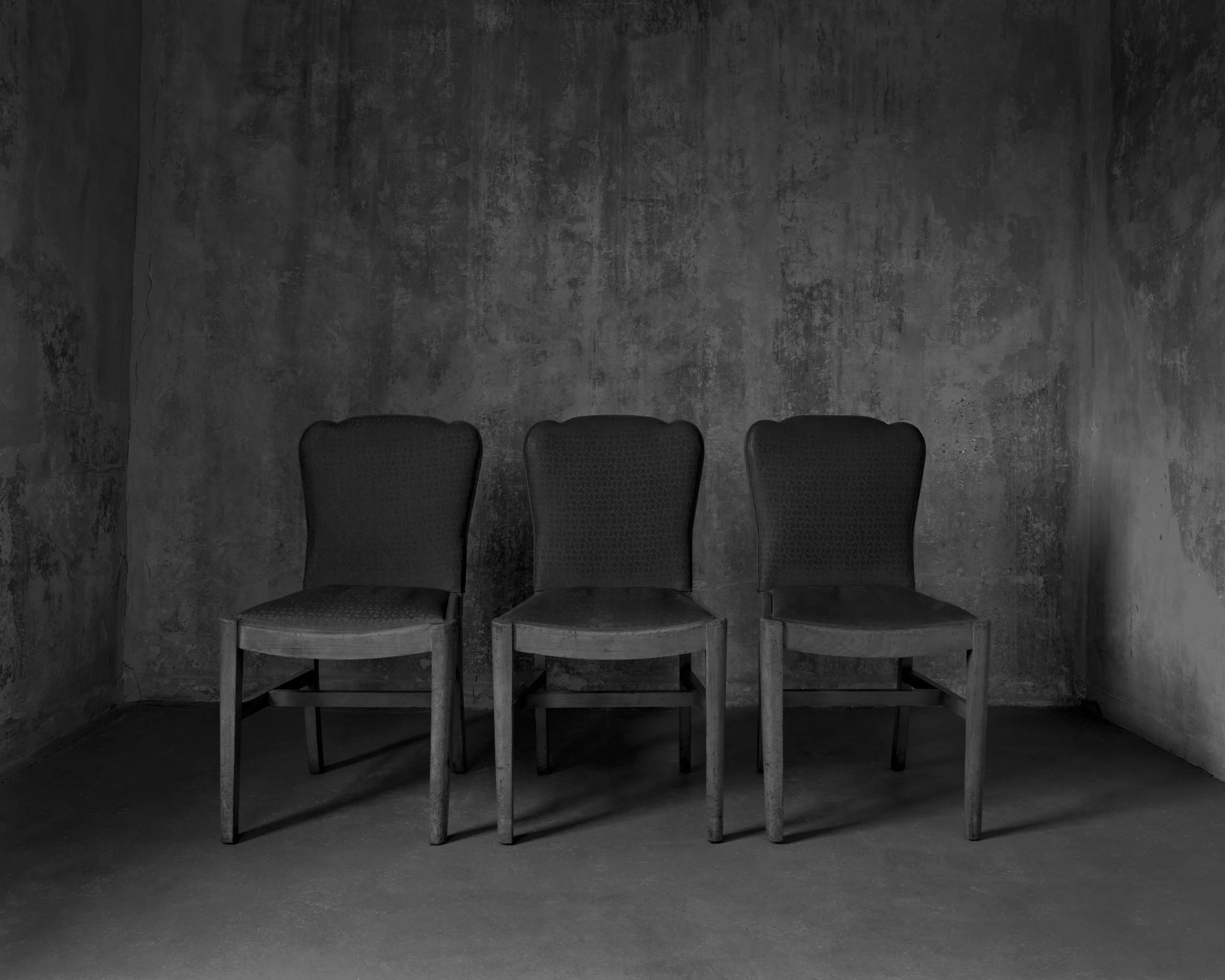
The same bare room provides the setting for a number of arrangements and configurations of objects. Some photographs are closer to stage sets than stilllifes’s, tableaux in which familiar household objects have been imaginatively transformed— a white cloth propped atop a table evoking a mountainous or glacial form, an upturned table becoming a four-poster-bed, festooned with rag-cloth bunting, a group of fake Xmas trees creating a gloomy forest. Such pictures invite the viewer to participate in childlike acts of make-believe. A certain innocence and lightness animates the cold and dark interior spaces of these pictures. Other photographs, like those with the bathtubs, are harsher, more chilling. The different arrangements of three fairly plain and upright chairs in the bare room once again evokes absent human figures. The formal arrangement of the empty chairs, each lined up and facing the camera, is like a formal Victorian studio group portrait in negative, bereft of its sitters. We are shown only the setting, a controlled, minimal and uncomforting mise en scene. In the other picture, the chairs are arranged so that they are now touching, interlocked, huddled and pressed together. Only the central chair is turned to face the wall. One of the sitters in this group portrait would have his or her back to us, remain, one assumes detached, disconnected from the other two. Thought of in terms of the lived world of social relations, the placement of the chairs in the picture is suggestive of something having gone awry, a breakdown in the order and unity of the portrait group.
Mark Durden, Professor of Photography at the University of South Wales, writer and artist.
Silent Compositions. Series 2000 – 2003. All website images are digital scans of 4x5 (10x13cm) analogue working contact prints.